

🌸Discover Beautiful Japanese Wagashi with This Beginner Japanese Reader!
What Is It? (これ なに?) is a Level 1 Japanese Graded Reader that helps complete beginners enjoy their first Japanese reading experience through a simple question and beautiful photographs of traditional Japanese sweets.
Is it a lemon, a bell, or a Christmas tree?
Students look closely at each photograph, read the Japanese question, and guess what the object resembles. As they continue, they discover a delightful surprise: every photograph shows a beautifully crafted Japanese sweet called wagashi.
🌸 Guess, Read, and Discover Japanese Wagashi
This reader introduces:
- One familiar question – Recognize and respond to これ なに?
- Everyday vocabulary – Identify familiar objects through visual clues.
- Early Japanese reading – Practise Hiragana and encounter Katakana with reading support.
- Japanese culture – Discover the beauty of wagashi and the tradition of enjoying sweets with green tea.
📖 Japanese Sentences from the Book
これ なに? What is it?
レモン? A lemon?
わからない。 I don’t know.
えっ? いちご? What? A strawberry?
おいしい。きれい。 Delicious. Beautiful.
These short, natural expressions make the book accessible to beginners who are not yet ready for longer sentences.
🎯 Language Features in This Japanese Reader
Students will practise:
- Simple questions and responses – Recognizing これ なに? and responding with single words.
- Beginner vocabulary – Naming familiar objects, foods, and shapes.
- Everyday expressions – Understanding わからない and simple descriptive words.
- Hiragana and Katakana – Recognizing both scripts, with Hiragana support for Katakana loanwords.
- Reading comprehension – Using visual clues and repetition to understand Japanese independently.
🌟 Additional Reading Challenge:
Although the main text is designed for complete beginners, the later pages introduce a few additional expressions.
Students who are ready for a gentle challenge can explore:
- Natural spoken Japanese – Understanding わからない as an everyday response
- Expressing surprise – Recognizing えっ?
- Recognizing Katakana loanwords – Reading longer words such as クリスマスツリー
- Simple descriptions – Reading おいしい and きれい
- A familiar particle and expression – Recognizing おちゃと いっしょに
- Polite invitations – Understanding どうぞ
As a follow-up activity, students can choose an unfamiliar photograph or object and ask classmates これ なに?
This allows them to practise a familiar Japanese question while gradually developing confidence in responding with simple words.
🧩 Suggested Teaching Activities
- Look and Guess: Show each photograph and ask students what they think it resembles.
- Read Together: Practise これ なに? before encouraging students to read independently.
- Picture and Word Matching: Match familiar Japanese words with the photographs.
- Katakana Discovery: Find words such as レモン、ベル and ボール and compare them with their Hiragana readings.
- Surprise Reveal: Ask students to predict what the photographs really show before revealing the wagashi.
- Create Your Own Quiz: Students draw or photograph an unusual-looking object and ask classmates これ なに?
🌟 What Makes This Reader Special?
What Is It? (これ なに?) turns one simple Japanese question into a delightful guessing game featuring beautiful traditional Japanese sweets (wagashi).
Repeated language, a learner-friendly Japanese font, Hiragana support for Katakana, and authentic photographs help complete beginners recognize familiar words and read with confidence.
Teachers can use this Japanese Graded Reader for shared reading, vocabulary practice, and prediction activities, while independent learners enjoy discovering Japanese words and culture at their own pace.
Can you guess what these beautiful wagashi really are?
📚 Explore the Special Features That Make Japanese Reading Easier
📖 Level 1 Japanese Reader Details
Japanese Reader Level: Level 1
Recommended for: Complete beginners and beginning Hiragana readers
Language Focus: これ なに?, single-word responses, わからない, simple adjectives, and everyday expressions
Vocabulary Theme: Familiar objects, shapes, nature, and simple descriptive words
Cultural Theme: Traditional Japanese wagashi and green tea culture
Script: Hiragana and Katakana with Hiragana reading support
Character Count: 131
Pages: 15
Text Type: Factual Description / Simple Question-and-Response Text
Product Type: A5 saddle-stitched booklet
ISBN: 978-0-6481178-9-6
✅ Perfect For
- Complete beginners and early Hiragana learners
- Primary and beginning secondary Japanese students
- Practising simple questions and one-word responses
- Introducing Katakana with Hiragana reading support
- Picture-based guessing games and shared reading
- Japanese wagashi and food culture lessons
- Independent reading and Extensive Reading (Tadoku)
🎧 Teaching & Learning Resources
Explore free teaching and learning resources through our Resource Library for Levels 1–3.
Teaching and learning resources:
- 🎧 Audio recordings – Narrated by Mariko Sensei; check the Resource Library for availability
- 📖 English translation – Support understanding of the Japanese text
- 💻 Quizlet vocabulary activities – Practise and review beginner Japanese vocabulary
🏫 Teaching a Class? Explore the What Is It? Class Set
Turn the wagashi guessing game into an interactive classroom activity with printed readers and a matching password-protected Online Flipbook.
Display the photographs and questions for whole-class reading while students follow along and make their own predictions.
🌸 Explore the What Is It? Japanese Reader Class Set & Online Flipbook
💜 A Note from Mariko Sensei
When I was growing up in Japan, wagashi were special treats. My grandmother sometimes took me to a small wagashi shop, where I could choose one of the beautifully crafted sweets.
I loved admiring their colors and shapes. They seemed almost too beautiful to eat!
I created this reader to share that childhood wonder while helping beginners enjoy reading their first Japanese words and questions.
I hope this book helps learners discover both the beauty of traditional Japanese wagashi and the pleasure of reading Japanese independently.
Most importantly, I hope beginners finish the book feeling:
“I did it! I read it myself!”
Have fun guessing, and enjoy discovering the beautiful world of wagashi!
— Mariko Sensei
📖 Your Next Japanese Reader
Continue developing Japanese reading confidence with these carefully graded readers.
🎮 Shiritori (しりとり) – Level 1 — Build confidence reading Hiragana and Katakana words through a traditional Japanese word-chain game.
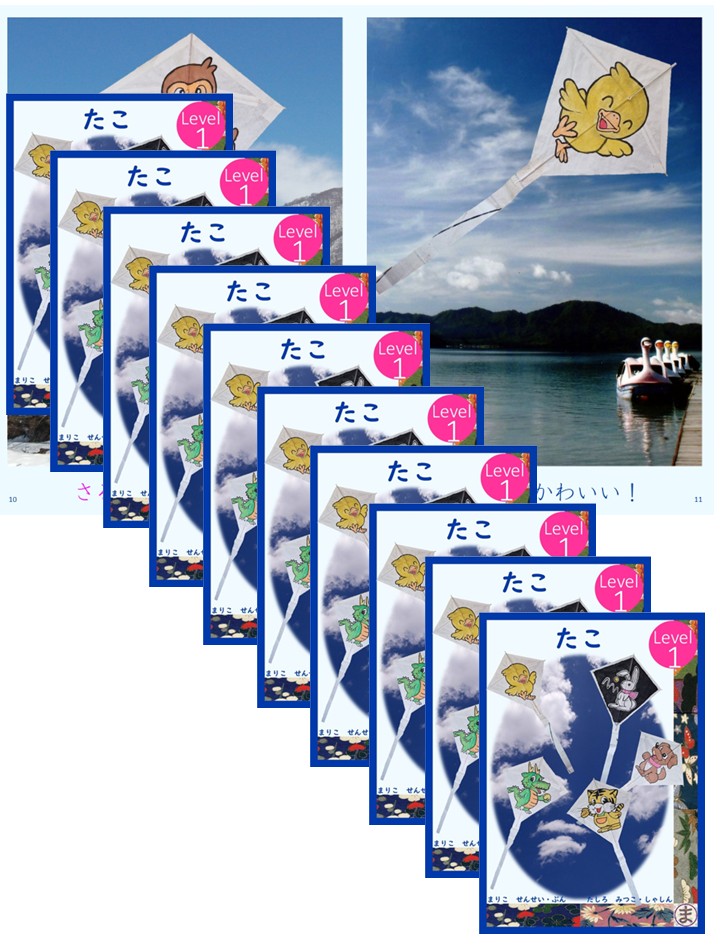
🪁 Kites (たこ) – Level 1 — Continue reading simple Japanese expressions while discovering the twelve zodiac animals through handmade Japanese kites.
🍫 Japanese Snacks (にほんのおかし) – Level 2 — Take the next step with short descriptive clues in a guessing quiz featuring popular Japanese snacks.
🎨 What Color Are the Body Parts? (からだは なにいろ?) – Level 2 — Progress to simple descriptive sentences about colors and body parts through Japanese characters and mascots.
📚 Explore More Japanese Reader Packs
🌱 Beginner Hiragana Readers Starter Pack — Progress from individual Hiragana words and expressions to short Japanese sentences and descriptive reading.
🏫 Primary & Elementary School Japanese Readers Pack — Explore engaging Japanese readers featuring colors, animals, language games, everyday experiences, and cultural topics.
🎓 Junior High School Japanese Readers Pack — Support Years 7–10 learners with progressively leveled Japanese readers, including accessible choices for beginners.
📚 All Japanese Readers Pack — Discover the complete collection of graded Japanese readers, from beginning Hiragana reading to advanced Japanese texts.
🖥️ Japanese Reader Class Sets & Online Flipbooks — Explore printed classroom sets with matching online flipbooks for teachers.
📌 Important Information
This Japanese Reader is designed for individual reading and Japanese Extensive Reading (Tadoku).
For classroom teaching, schools can purchase the What Is It? Japanese Reader Class Set & Online Flipbook.
Copyright © Mariko Earle. All rights reserved.
No part of this publication may be copied, reproduced, distributed, or shared without prior permission from the copyright holder.


 English
 日本語
Ricardo –
Great for beginners, and i imagine it being engaging for children too